Compare
Olight vs SureFire
Olight sells more light for less money. SureFire sells fewer moving parts and a decade of shelf life. Both arguments are real.
By Scooter M. · Published · Updated
| # | Product | Best for | Output | Price |
|---|---|---|---|---|
| 1 | 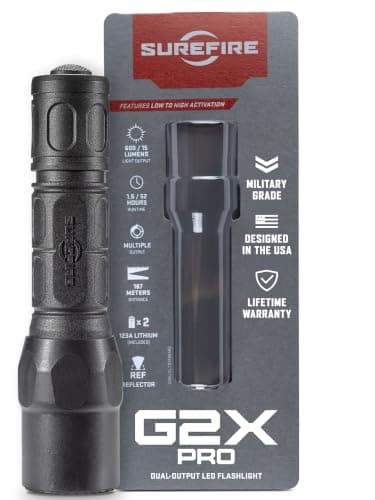 SureFire G2X ProTop pick600 lumens, 8,700 candela, 1.5 hours, and two modes. The specification is modest; the point is that nothing on it can go wrong. | A simple two-mode light that will outlive you | 600 lm | |
| 2 | 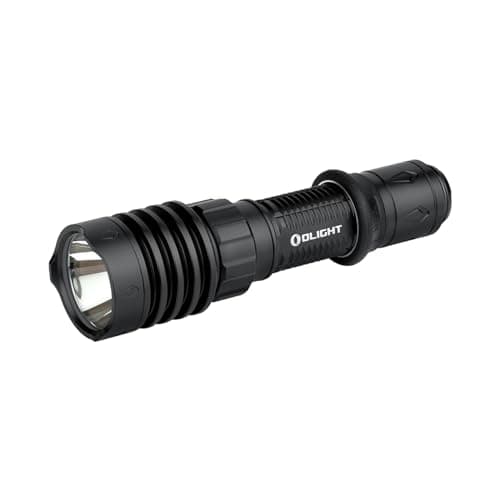 Olight Warrior X 42,600 lumens and 630 m of stated throw. The longest published reach of any general-purpose light here. | Reach in a tactical body | 2,600 lm | Check price#ad |
| 3 | 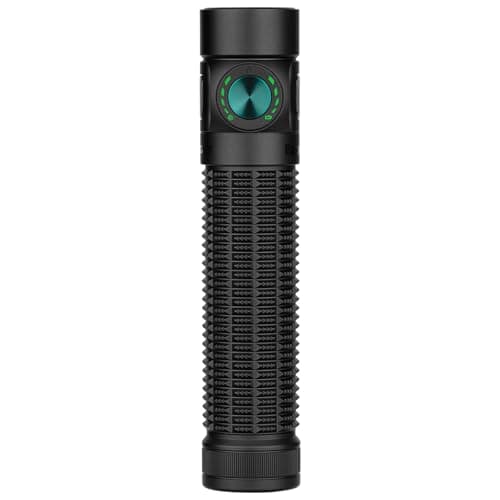 Olight Baton 4 Pro1,600 lumens from something the size of a lipstick tube. The output is real and the runtime at that output is not the point. | The most output in a pocket-sized body | 1,600 lm | |
| 4 | 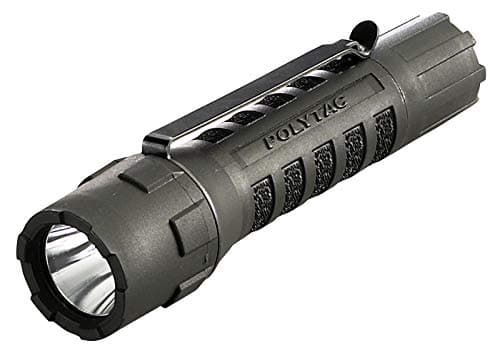 Streamlight PolyTac600 lumens, 214 m, 2.75 hours, IPX7 and 3 m impact resistance in a nylon polymer body. The one you leave in a truck. | A polymer duty light you will not worry about | 600 lm |
We earn a commission if you buy through the links on this page, at no extra cost to you. It does not change what we recommend or the order they appear in. Full disclosure. Prices checked October 15, 2026.
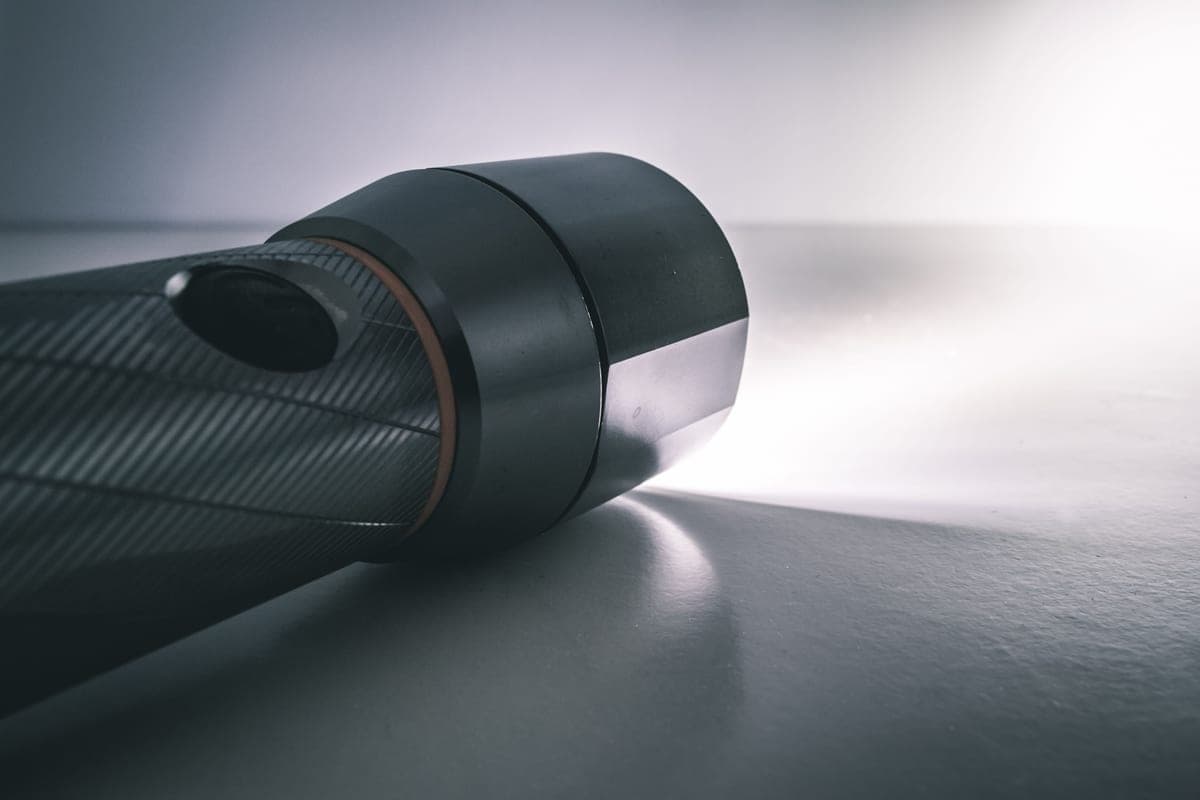
On a specification sheet this is not a close contest. The SureFire G2X Pro publishes 600 lumens and 8,700 candela; the Olight Warrior X 4 publishes 2,600 lumens and 630 meters, which is roughly 99,200 candela. Eleven times the beam intensity, for less money.
And yet the SureFire keeps getting bought, by people who have looked at both. Working out why is the interesting part.
The specification comparison
| SureFire G2X Pro | Olight Warrior X 4 | |
|---|---|---|
| Output | 600 lm high, 15 lm low | 2,600 lm |
| Candela | 8,700 (published) | 99,200 (computed from 630 m) |
| Beam distance | 187 m (published) | 630 m (published) |
| Runtime | 1.5 h high, 52 h low | not published |
| Power | 2 x CR123A lithium primaries | Rechargeable, magnetic |
| Modes | Two | Multiple, dual switch |
| Weight | 125 g | not published |
| Ingress rating | IPX7 | not published |
The case for the SureFire
Two modes, low then high. No programming, no mode memory to get confused, no strobe to land on by accident. A light you have not touched in a year behaves exactly as you remember.
And CR123A lithium primaries hold their charge for roughly a decade. A SureFire in a drawer works in five years. A rechargeable Olight in the same drawer is flat within months and possibly degraded.
The case for the Olight
Vastly more light for less money, magnetic charging that is a genuine pleasure to use, and a modern dual-switch interface. If you use a light regularly, the running cost of CR123A primaries alone makes the SureFire an expensive choice.
What each publishes
On the disclosure test that runs through this site these two are no longer level. SureFire publishes a weight, IPX7, a beam distance that reconciles with its candela, and a runtime for both of its modes. Olight publishes output and a beam distance and then stops — no runtime, no weight, no ingress rating. Neither matches Streamlight's per-mode sheet — see Streamlight vs SureFire.
The honest recommendation
They are for different jobs. If the light lives in your pocket and gets used, buy the Olight: more light, better charging, cheaper to run. If the light lives in a drawer or a vehicle against something going wrong, buy the SureFire or a Streamlight PolyTac, because a light that works after five years of neglect is worth more than one that is four times brighter and flat.
The most defensible answer is to own both, and they cost less together than one high-end light. Emergency flashlights covers the drawer-light case properly.
The picks, in full
Top pick · A simple two-mode light that will outlive you
SureFire G2X Pro
600 lumens, 8,700 candela, 1.5 hours, and two modes. The specification is modest; the point is that nothing on it can go wrong.
SureFire publishes both 8,700 candela and a 187 m beam distance, and the two reconcile: the square root of 8,700 divided by 0.25 is 186.5 m. That makes this the only light on this site outside Streamlight and Maglite whose two beam figures can be checked against each other. It is still well short of the ProTac's 374 m on similar output, because SureFire deliberately builds a wider beam with more usable spill.
Two modes, low then high, with no strobe and no programming. On a light you might need in a hurry, that is a feature.
CR123A primaries hold their charge for a decade on a shelf. For a light that lives in a drawer against the worst night of your life, that matters more than rechargeability.
What works
- Two modes, no menu, nothing to misconfigure
- CR123A lithium cells with a ten-year shelf life
- The most durable reputation in the category, earned over decades
What does not
- 600 lumens and 8,700 candela are modest for the price in 2026
- IPX7 is immersion-only - no dust digit - and SureFire states no impact rating
- CR123A cells cost real money to run
Skip this ifyou buy on specification. Almost everything here beats it on paper; you are paying for reliability and simplicity instead.
Published specification
- Output
- 600 lmHigh. Low is 15 lm.SureFire G2X Pro — manufacturer spec page (retrieved October 6, 2026)
- Peak intensity
- 8,700 cdSureFire G2X Pro — manufacturer spec page (retrieved October 6, 2026)
- Beam distance
- 187 mPublished, and it reconciles with the 8,700 cd figure.SureFire G2X Pro — manufacturer spec page (retrieved October 6, 2026)
- Runtime
- 1.5 h on highLow is 52 h.SureFire G2X Pro — manufacturer spec page (retrieved October 6, 2026)
- Battery
- 2 x CR123A lithiumSureFire G2X Pro — manufacturer spec page (retrieved October 6, 2026)
- Weight
- 125 g4.4 oz, cells installed.SureFire G2X Pro — manufacturer spec page (retrieved October 6, 2026)
- Ingress
- IPX7No dust digit; no impact rating stated.SureFire G2X Pro — manufacturer spec page (retrieved October 6, 2026)
#ad · how this is funded · price as of October 15, 2026
Pick 2 · Reach in a tactical body
Olight Warrior X 4
2,600 lumens and 630 m of stated throw. The longest published reach of any general-purpose light here.
630 m works back to about 99,200 candela. That is a genuine thrower: nearly three times the ProTac HL-X's intensity from twice the lumens, which means a much tighter hotspot.
The trade is spill. At that concentration you get a bright circle and very little else, which is superb across a field and awkward in a corridor.
No published runtime is a real gap on a light this bright. Sustained output is the question a 2,600-lumen thrower most needs to answer.
What works
- 630 m of published throw, the longest in the general-purpose set
- Magnetic charging with no port to flood
- 2,600 lumens alongside the reach, so it is not a narrow-beam-only light
What does not
- No sourced runtime, candela, weight or IP rating
- Very tight hotspot with limited spill
- Proprietary charger
Skip this ifyou work indoors. The beam is built for distance and it is the wrong tool inside a building.
Published specification
- Output
- 2,600 lmOlight Warrior X 4 — the brand's own listing on Amazon.com (retrieved September 1, 2026)
- Peak intensity
- not published
- Beam distance
- 630 mOlight Warrior X 4 — the brand's own listing on Amazon.com (retrieved September 1, 2026)
- Runtime
- not published
- Battery
- Rechargeable, magnetic chargingOlight Warrior X 4 — the brand's own listing on Amazon.com (retrieved September 1, 2026)
- Weight
- not published
- Ingress
- not published
#ad · how this is funded · price as of October 15, 2026
Pick 3 · The most output in a pocket-sized body
Olight Baton 4 Pro
1,600 lumens from something the size of a lipstick tube. The output is real and the runtime at that output is not the point.
1,600 lumens in a body this small is a thermal problem, not an optical one. Every light in this class steps down within a minute or two, and the honest way to read the number is as a burst.
Olight's magnetic charging is the best-executed version of the idea: no port to flood, no cable to thread, and the light sits on a dock.
We could only reach the brand's retail listing, so output and charging are the only figures we assert.
What works
- The highest published output in the pocket class
- Magnetic charging with no exposed port
- Genuinely small
What does not
- No sourced runtime, candela, beam distance or IP rating
- Proprietary charger to lose
- 1,600 lumens is a burst figure in a body this size
Skip this ifyou want to know how long it holds high. Without a published step-down table, the headline is unverifiable.
Published specification
- Output
- 1,600 lmOlight Baton 4 Pro — the brand's own listing on Amazon.com (retrieved September 1, 2026)
- Peak intensity
- not published
- Beam distance
- not published
- Runtime
- not published
- Battery
- Rechargeable, magnetic chargingOlight Baton 4 Pro — the brand's own listing on Amazon.com (retrieved September 1, 2026)
- Weight
- not published
- Ingress
- not published
#ad · how this is funded · price as of October 15, 2026
Pick 4 · A polymer duty light you will not worry about
Streamlight PolyTac
600 lumens, 214 m, 2.75 hours, IPX7 and 3 m impact resistance in a nylon polymer body. The one you leave in a truck.
2.75 hours at 600 lumens from two CR123A cells is a very efficient result — that is roughly 6 watt-hours doing real work rather than being thrown away as heat.
3 m of impact resistance is the highest figure in this roundup. Polymer absorbs a drop that would dent an aluminum body.
119 g with cells installed makes this the lightest full-size duty light here.
What works
- Full per-mode table published, all three modes
- 3 m impact resistance and IPX7
- 119 g, with a ten-year shelf life on its cells
What does not
- 600 lumens is modest against the rechargeable competition
- CR123A running costs add up
- We could not pin a current ASIN for it, so the buy link is a tagged Amazon search
Skip this ifyou use a light daily. CR123A primaries are the wrong economics for frequent use; buy a rechargeable instead.
Published specification
- Output
- 600 lmHigh. Medium 260 lm, low 35 lm.Streamlight PolyTac — manufacturer spec page (retrieved September 1, 2026)
- Peak intensity
- 11,500 cdHigh. Medium 4,900 cd, low 675 cd. Each reconciles with the published distance for its mode.Streamlight PolyTac — manufacturer spec page (retrieved September 27, 2026)
- Beam distance
- 214 mHigh. 140 m medium, 52 m low.Streamlight PolyTac — manufacturer spec page (retrieved September 1, 2026)
- Runtime
- 2.75 h high / 5.5 h medium / 34 h lowStreamlight PolyTac — manufacturer spec page (retrieved September 1, 2026)
- Battery
- 2 x CR123A lithium (included)Streamlight PolyTac — manufacturer spec page (retrieved September 1, 2026)
- Weight
- 119 g (4.2 oz) with batteriesStreamlight PolyTac — manufacturer spec page (retrieved September 1, 2026)
- Ingress
- IPX7Waterproof to 1 m for 30 minutes; 3 m impact resistance testedStreamlight PolyTac — manufacturer spec page (retrieved September 1, 2026)
#ad · how this is funded · price as of October 15, 2026
Questions people actually ask
Is SureFire worth the money?
Not on specifications — an Olight gives several times the beam intensity for less. What SureFire sells is simplicity and shelf life: two modes with nothing to misconfigure, running on CR123A primaries that hold their charge for about a decade.
Why is SureFire so much dimmer than modern lights?
Because the design priorities are different. The G2X Pro's 600 lumens and 8,700 candela are modest by 2026 standards, and the light is built around two modes, a wide usable beam and a decade of shelf life rather than around a headline figure.
Are CR123A batteries worth the running cost?
For a light used regularly, no — roughly two cells a month at a couple of hours a week, which over five years exceeds the price of the light. For a light that waits in a drawer, they are exactly right, because they hold charge for about a decade.
Which is better for everyday carry, Olight or SureFire?
Olight, for most people: more light, magnetic charging, and no running cost. SureFire's advantages are shelf life and simplicity, and neither is doing much for a light you use every day.
Do SureFire and Olight publish full specifications?
SureFire does, on the light we cover: output, candela, a 187 m beam distance, both runtimes, a 125 g weight and IPX7. Olight publishes output and sometimes a beam distance, and no runtime, weight or ingress rating at all. Streamlight still publishes more than either, per mode.
Sources
Every figure on this page came from one of the documents below, read on the date shown. We do not cite other review sites, forum posts or video reviews as sources of fact.
Read next
SureFire G2X Pro review
A specification-first review of the SureFire G2X Pro: the two beam figures that check each other, fifty-two hours on low, what IPX7 does not cover, and who should buy something brighter.
Flashlight brand comparisons
Brand-against-brand comparisons on published figures and disclosure quality, not on reputation.
Streamlight vs SureFire
The two American duty brands compared on documentation, power strategy and interface philosophy.
Best flashlights for power outages
Outage lighting ranked on shelf life, area coverage and findability rather than on output.
Best tactical flashlights, ranked on candela rather than lumens
The tactical ranking: published candela, beam distance, sustained runtime and ingress rating, all sourced.
18650 vs 21700, and every other cell format
Cell formats compared on capacity, current rating and dimensions, with the safety rules that matter.
Found a number that is wrong? Tell us and we will fix it and say so. Our methodology shows every formula on this page.