Compare
Olight vs Fenix
Two of the biggest names in enthusiast lights, and a clear split: Fenix tells you more, Olight charges more conveniently.
By Scooter M. · Published · Updated
| # | Product | Best for | Output | Price |
|---|---|---|---|---|
| 1 | 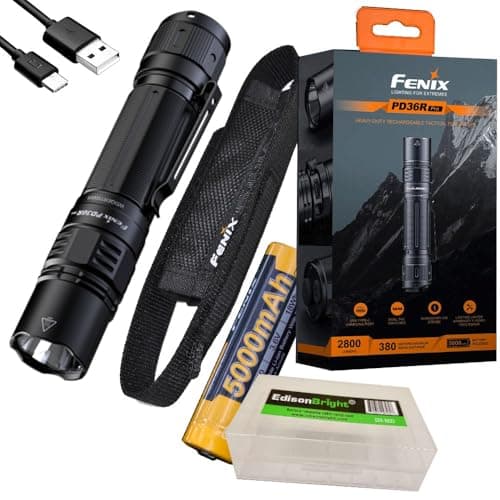 Fenix PD36R ProTop pick2,800 lumens from a 21700 cell holding 18 watt-hours, at 169 grams. The biggest energy store in the tactical set. | The most output and energy in a tactical body | 2,800 lm | |
| 2 | 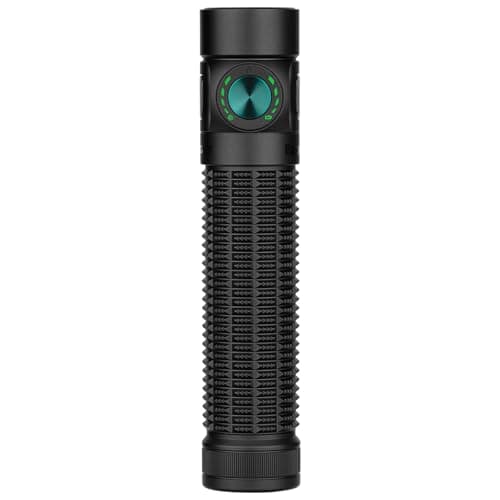 Olight Baton 4 Pro1,600 lumens from something the size of a lipstick tube. The output is real and the runtime at that output is not the point. | The most output in a pocket-sized body | 1,600 lm | |
| 3 | 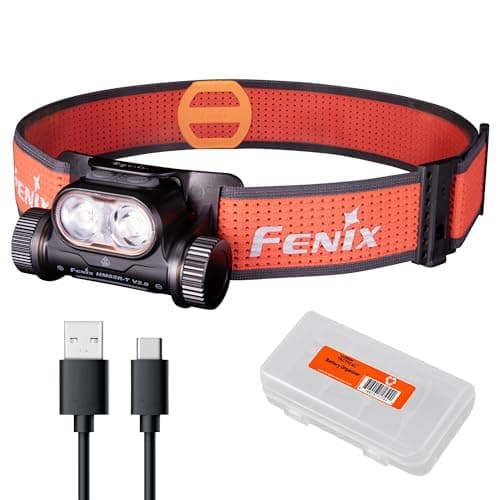 Fenix HM65R-T V2.01,600 lumens and 170 m from a magnesium body running a standard 18650, at 140 g. The removable cell is what separates it from the sealed-pack lamps. | Long nights where you want reach and a spare cell | 1,600 lm | |
| 4 | 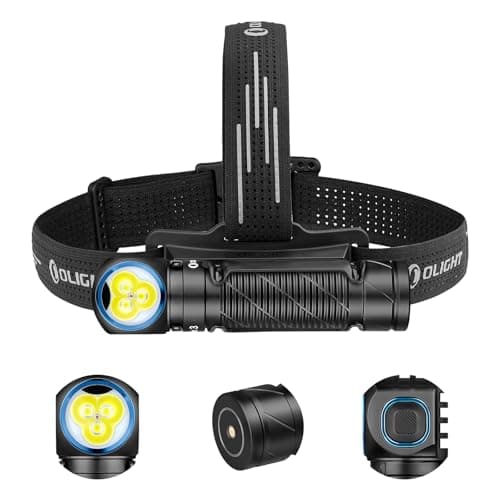 Olight Perun 33,000 lumens, 160 m of stated beam, and a body that comes off the strap and works as a right-angle flashlight. | A headlamp that detaches into a proper flashlight | 3,000 lm | |
| 5 | 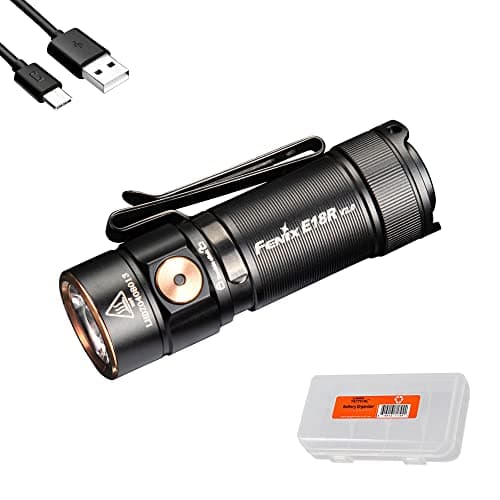 Fenix E18R V2.01,200 lumens from a light barely longer than its own cell, USB-C rechargeable, with a proper tail switch. | Maximum output per cubic inch with a tail switch | 1,200 lm | |
| 6 | 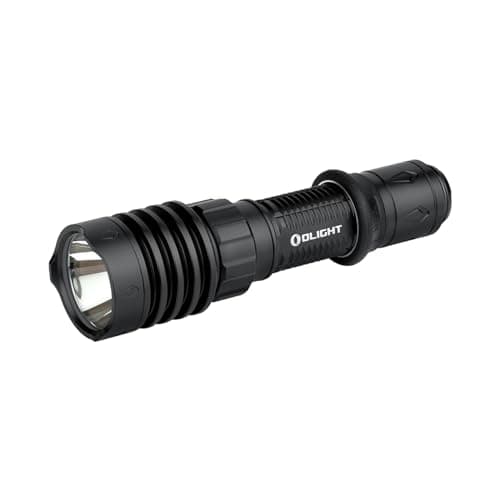 Olight Warrior X 42,600 lumens and 630 m of stated throw. The longest published reach of any general-purpose light here. | Reach in a tactical body | 2,600 lm | Check price#ad |
We earn a commission if you buy through the links on this page, at no extra cost to you. It does not change what we recommend or the order they appear in. Full disclosure. Prices checked October 16, 2026.
These two brands sell into the same market at similar prices and are the default recommendation from most enthusiast sources. The difference that matters for a buyer is not build quality, which we cannot assess, but disclosure — and there Fenix is clearly ahead.
What each publishes
| Fenix | Olight | |
|---|---|---|
| Peak output | Yes | Yes |
| Beam distance | Sometimes (HM65R-T: 170 m) | Sometimes (Perun 3: 160 m; Warrior X 4: 630 m) |
| Candela | No | No |
| Runtime | Maximum figure, plus per-mode tables on its own site | No |
| Battery capacity | Yes (3,400 mAh, 5,000 mAh, 1,900 mAh) | No |
| Weight | Yes | No |
| IP rating | Sometimes (HM65R-T: IP68; HL18R-T: IP66) | No |
The row that matters most is battery capacity. Fenix publishes it, which means you can compute a real runtime from watt-hours. Olight does not, so nobody outside Olight can tell you how long a Baton 4 Pro holds any given output.
Cell strategy
Fenix builds around standard cells: the PD36R Pro takes a 21700, the HM65R-T takes an 18650, the E18R takes a 16340. When the cell tires you replace it for a few dollars.
Olight builds around sealed cells and proprietary packs charged magnetically. Lighter, simpler, and it means the light has a finite lifespan set by the cell rather than by the body.
Charging: where Olight wins
Olight's magnetic charging is the best-executed version of the idea in the market. No port to fill with grit, no cable to thread, and the light sits on a dock. On a light used daily that is a genuine, repeated convenience.
The cost is a proprietary cable. Lose it on a trip and the light is a torch with a fixed amount of energy left. Fenix uses USB-C, which means any cable in your bag works.
Where each one leads
| Category | Pick | Why |
|---|---|---|
| Tactical handheld | Fenix PD36R Pro | 18 Wh of published 21700 capacity and 380 m of published reach |
| Maximum reach | Olight Warrior X 4 | 630 m published, the longest in our general-purpose set |
| Headlamp | Fenix HM65R-T V2.0 | Published IP68, 170 m, 140 g and a standard 18650 |
| Pocket EDC | Olight Baton 4 Pro on convenience; Fenix E18R V2.0 on serviceability | A genuine split |
| Detachable headlamp | Olight Perun 3 | The two-in-one execution is better |
The honest summary
If you want to know what you are buying, buy Fenix. Battery capacity, weight and an IP rating are published on most of the range, which is what lets you compute a runtime and plan around it.
If you want the light to be pleasant to live with and you are not going to compute anything, Olight's charging and its two-in-one designs are genuinely better. Just understand that you are buying on trust, because the numbers to check are not published.
The picks, in full
Top pick · The most output and energy in a tactical body
Fenix PD36R Pro
2,800 lumens from a 21700 cell holding 18 watt-hours, at 169 grams. The biggest energy store in the tactical set.
A 5,000 mAh 21700 at 3.6 V is 18.0 watt-hours — nearly three times what the ProTac HL-X carries. That is the case for the 21700 format in one number.
380 m of reach on 2,800 lumens works back to about 36,100 candela, almost identical to the ProTac's 35,000 from 1,300 lumens. The Fenix is spending its extra output on spill, not on distance.
169 g including the cell is only 7 g more than a ProTac on CR123A, for nearly triple the energy. That is what four years of cell development buys.
What works
- 18 Wh of stored energy, the most in the tactical set
- 2,800 lumens with 380 m of published reach
- Standard 21700 cell, USB-C on the light
What does not
- Waterproofing stated as 2 m submersion, with no IP code to compare against
- No published candela, so the throw figure cannot be cross-checked
- 2,800 lumens will step down quickly in a body this size
Skip this ifyou need a shelf-stable light. A rechargeable cell self-discharges; for a drawer light, CR123A primaries are the right answer.
Published specification
- Peak intensity
- not published
- Beam distance
- 380 mFenix states 1,247 feet (380 m)Fenix PD36R Pro — manufacturer spec page (retrieved September 17, 2026)
- Runtime
- 3 h 30 min on Turbo / 42 h maximumTurbo is measured to 10% output under ANSI FL 1, so it includes step-down; 42 h is the lowest mode. Other modes are published as a chart imageFenix PD36R Pro — manufacturer spec page (retrieved September 1, 2026)
- Battery
- 5,000 mAh 21700 Li-ion (included), USB-CFenix PD36R Pro — manufacturer spec page (retrieved September 1, 2026)
- Weight
- 169 g (5.96 oz)Including batteryFenix PD36R Pro — manufacturer spec page (retrieved September 1, 2026)
- Ingress
- Waterproof underwater to 2 mFenix states this without giving an IP codeFenix PD36R Pro — manufacturer spec page (retrieved September 17, 2026)
#ad · how this is funded · price as of October 16, 2026
Pick 2 · The most output in a pocket-sized body
Olight Baton 4 Pro
1,600 lumens from something the size of a lipstick tube. The output is real and the runtime at that output is not the point.
1,600 lumens in a body this small is a thermal problem, not an optical one. Every light in this class steps down within a minute or two, and the honest way to read the number is as a burst.
Olight's magnetic charging is the best-executed version of the idea: no port to flood, no cable to thread, and the light sits on a dock.
We could only reach the brand's retail listing, so output and charging are the only figures we assert.
What works
- The highest published output in the pocket class
- Magnetic charging with no exposed port
- Genuinely small
What does not
- No sourced runtime, candela, beam distance or IP rating
- Proprietary charger to lose
- 1,600 lumens is a burst figure in a body this size
Skip this ifyou want to know how long it holds high. Without a published step-down table, the headline is unverifiable.
Published specification
- Output
- 1,600 lmOlight Baton 4 Pro — the brand's own listing on Amazon.com (retrieved September 1, 2026)
- Peak intensity
- not published
- Beam distance
- not published
- Runtime
- not published
- Battery
- Rechargeable, magnetic chargingOlight Baton 4 Pro — the brand's own listing on Amazon.com (retrieved September 1, 2026)
- Weight
- not published
- Ingress
- not published
#ad · how this is funded · price as of October 16, 2026
Pick 3 · Long nights where you want reach and a spare cell
Fenix HM65R-T V2.0
1,600 lumens and 170 m from a magnesium body running a standard 18650, at 140 g. The removable cell is what separates it from the sealed-pack lamps.
A 3,400 mAh 18650 at a nominal 3.6 V is 12.2 watt-hours. That is more energy than a Petzl NAO RL carries, in a lamp 5 g lighter, because a bare 18650 is a more efficient package than a molded pack.
It is also the only headlamp in this set whose battery you can replace at a checkpoint for three dollars, because 18650 is a standard cell and not a proprietary brick.
IP68 rather than IPX4 is the second real difference. This one survives being dropped in water; most of the running lamps here do not.
What works
- Standard 18650 cell: swappable, cheap, and available everywhere
- IP68 and 2 m impact rating, the toughest specification in this roundup
- Dual emitters, one white and one warm white, so it works for close tasks as well as reach
What does not
- 140 g is at the heavy end for a running lamp
- Charging works only with Fenix ARB-L18 series cells, which limits the swap-any-18650 advantage
- No published candela figure
Skip this ifyou count grams. A Swift LT does the camp job at 43 g; you are carrying 97 g extra for reach and a removable cell.
Published specification
- Peak intensity
- not published(Fenix publishes distance, not peak intensity)
- Runtime
- 300 h maximumLowest mode. The turbo figure is far shorter and Fenix publishes it per-mode.Fenix HM65R-T V2.0 — manufacturer spec page (retrieved September 1, 2026)
- Battery
- 3,400 mAh 18650 Li-ion (included), or 2 x CR123AFenix HM65R-T V2.0 — manufacturer spec page (retrieved September 1, 2026)
- Weight
- 140 g (4.94 oz)Including battery and headbandFenix HM65R-T V2.0 — manufacturer spec page (retrieved September 1, 2026)
- Ingress
- IP68Dust tight and immersion rated; 2 m impact resistanceFenix HM65R-T V2.0 — manufacturer spec page (retrieved September 1, 2026)
#ad · how this is funded · price as of October 16, 2026
Pick 4 · A headlamp that detaches into a proper flashlight
Olight Perun 3
3,000 lumens, 160 m of stated beam, and a body that comes off the strap and works as a right-angle flashlight.
3,000 lumens at 160 m tells you this is a flood-biased beam. For comparison, a Petzl Swift RL reaches 168 m on 1,200 lumens — more distance from 40 percent of the output, because distance comes from intensity, not from lumens.
The two-in-one design is the real selling point. A right-angle light that clips to a pocket and also mounts on a strap replaces two tools.
Marketing copy calling it waterproof without an IP number is exactly the kind of claim we will not repeat as a specification.
What works
- Detaches into a genuinely useful right-angle flashlight
- Magnetic charging, which is quick and has no port to flood
- Published beam distance, which many competitors omit
What does not
- No sourced runtime, weight, or IP rating
- 3,000 lumens on 160 m of reach is a wide beam sold on a big number
- Proprietary magnetic charger to lose
Skip this ifyou want distance. The published figures say flood; a 1,200-lumen Petzl reaches further.
Published specification
- Peak intensity
- not published
- Beam distance
- 160 mOlight Perun 3 — the brand's own listing on Amazon.com (retrieved September 1, 2026)
- Runtime
- not published
- Battery
- Rechargeable, magnetic chargingOlight Perun 3 — the brand's own listing on Amazon.com (retrieved September 1, 2026)
- Weight
- not published
- Ingress
- not published(Marketed as waterproof; no rating stated in the listing)
#ad · how this is funded · price as of October 16, 2026
Pick 5 · Maximum output per cubic inch with a tail switch
Fenix E18R V2.0
1,200 lumens from a light barely longer than its own cell, USB-C rechargeable, with a proper tail switch.
A 16340 holds about 2.9 watt-hours. At 1,200 lumens that is a few minutes before the driver steps it down, which is normal and worth understanding before you buy on the headline.
The tail switch is what separates this from the twist-and-hope keychain class: momentary on with your thumb, without changing your grip.
Very short overall length makes it disappear in a coin pocket, which is the real reason people carry it.
What works
- 1,200 lumens in a genuinely tiny body
- Tail switch with momentary operation
- USB-C on the light
What does not
- 2.9 Wh cell means turbo is measured in minutes
- No sourced runtime, candela or IP rating
- 16340 is a less common cell than 18650
Skip this ifyou need sustained light. The cell is too small to hold high output for long and nothing in the design changes that.
Published specification
- Peak intensity
- not published
- Beam distance
- not published
- Runtime
- not published
- Battery
- 16340 Li-ion, USB-C rechargeableFenix E18R V2.0 — the brand's own listing on Amazon.com (retrieved September 1, 2026)
- Weight
- not published
- Ingress
- not published
#ad · how this is funded · price as of October 16, 2026
Pick 6 · Reach in a tactical body
Olight Warrior X 4
2,600 lumens and 630 m of stated throw. The longest published reach of any general-purpose light here.
630 m works back to about 99,200 candela. That is a genuine thrower: nearly three times the ProTac HL-X's intensity from twice the lumens, which means a much tighter hotspot.
The trade is spill. At that concentration you get a bright circle and very little else, which is superb across a field and awkward in a corridor.
No published runtime is a real gap on a light this bright. Sustained output is the question a 2,600-lumen thrower most needs to answer.
What works
- 630 m of published throw, the longest in the general-purpose set
- Magnetic charging with no port to flood
- 2,600 lumens alongside the reach, so it is not a narrow-beam-only light
What does not
- No sourced runtime, candela, weight or IP rating
- Very tight hotspot with limited spill
- Proprietary charger
Skip this ifyou work indoors. The beam is built for distance and it is the wrong tool inside a building.
Published specification
- Output
- 2,600 lmOlight Warrior X 4 — the brand's own listing on Amazon.com (retrieved September 1, 2026)
- Peak intensity
- not published
- Beam distance
- 630 mOlight Warrior X 4 — the brand's own listing on Amazon.com (retrieved September 1, 2026)
- Runtime
- not published
- Battery
- Rechargeable, magnetic chargingOlight Warrior X 4 — the brand's own listing on Amazon.com (retrieved September 1, 2026)
- Weight
- not published
- Ingress
- not published
#ad · how this is funded · price as of October 16, 2026
Questions people actually ask
Is Olight or Fenix better?
Fenix publishes more — battery capacity, weight and IP ratings across most of the range — which lets you compute a real runtime. Olight's magnetic charging and two-in-one designs are better executed. Which matters more depends on whether you want to verify specifications or charge conveniently.
Do Olight flashlights use standard batteries?
Mostly sealed or proprietary cells charged magnetically, rather than user-replaceable standard cells. Fenix builds around standard 16340, 18650 and 21700 cells, so a tired battery is a few-dollar replacement rather than the end of the light.
Is Olight's magnetic charging worth it?
It is the best-executed version of the idea and a genuine daily convenience, with no port to fill with grit. The cost is a proprietary cable that becomes a single point of failure away from home.
Which brand has the longest throw?
Of the lights we cover, the Olight Warrior X 4 at a published 630 meters, which works back to about 99,200 candela. The Fenix PD36R Pro's published 380 meters is a much wider beam despite higher output.
Which is better for a headlamp, Olight or Fenix?
Fenix, on published figures: the HM65R-T V2.0 states IP68, 170 meters, 140 grams and a standard 3,400 mAh 18650. The Olight Perun 3 states 3,000 lumens and 160 meters and nothing else we could source.
Are Fenix flashlights repairable?
More so, in the sense that matters most: the cell is a standard replaceable format. Note the caveat that Fenix states the HM65R-T charges only with its own ARB-L18 series cells, which limits the swap-any-cell advantage on that model.
Sources
Every figure on this page came from one of the documents below, read on the date shown. We do not cite other review sites, forum posts or video reviews as sources of fact.
- Fenix PD36R Pro — manufacturer spec page (retrieved September 1, 2026)
- Fenix HM65R-T V2.0 — manufacturer spec page (retrieved September 1, 2026)
- ANSI/PLATO FL 1 flashlight performance standard — definitions of lumens, peak beam intensity, beam distance, runtime, impact and water resistance
- IEC 60529 — the IP (ingress protection) rating system
Read next
Flashlight brand comparisons
Brand-against-brand comparisons on published figures and disclosure quality, not on reputation.
Nitecore vs Fenix
Nitecore against Fenix: output per dollar against specification completeness, across headlamps and handhelds.

Best EDC flashlights, ranked on what they actually hold
The full EDC ranking: cell format, stored energy, color rendering and beam shape, every figure sourced.
18650 vs 21700, and every other cell format
Cell formats compared on capacity, current rating and dimensions, with the safety rules that matter.

Best headlamps, ranked on the watt-hours behind the lumens
The full headlamp ranking: output, weight, battery energy and beam distance, every figure sourced to the maker.
Found a number that is wrong? Tell us and we will fix it and say so. Our methodology shows every formula on this page.